Lingua italiana
 Principio di base di un trasformatore da 400Hz
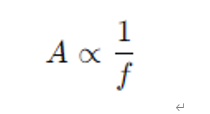
Le dimensioni di un trasformatore sono strettamente correlate alla sua frequenza operativa. Nella progettazione dei trasformatori, l’area della sezione trasversale del nucleo è solitamente proporzionale alla frequenza operativa.
Pertanto, quando la frequenza operativa viene aumentata da 50Hz o 60Hz a 400Hz, il volume del nucleo richiesto può essere notevolmente ridotto.
In un tipico sistema di alimentazione aeronautico, il processo di conversione dell’energia include tipicamente i seguenti passaggi:
- 1. Raddrizzamento dell’alimentazione CC di bordo (ad es., 28V o 270V CC) o dell’alimentazione CA a frequenza convertita.
- 2. Generazione di un’alimentazione CA stabile a 400Hz utilizzando la tecnologia PWM tramite un inverter.
- 3. Il **trasformatore da 400Hz** esegue la regolazione della tensione (ad es., step-up a 115V/200V) e fornisce isolamento elettrico.
Attraverso questa struttura, il trasformatore da 400Hz assume contemporaneamente le importanti funzioni di **trasformazione di tensione, isolamento di sistema e stabilizzazione della qualità dell’energia** durante il processo di conversione dell’energia.
Materiali magnetici e ottimizzazione strutturale
Per adattarsi a frequenze operative più elevate, i trasformatori da 400Hz impiegano tipicamente i seguenti materiali e tecnologie:
- 1. Struttura laminata in lamierino di acciaio al silicio sottile (spessore circa 0,1–0,2 mm)
- 2. Materiali per nucleo in lega amorfa
- 3. Materiali ferritici a basse perdite
Questi materiali possiedono elevata permeabilità magnetica e basse perdite per correnti parassite, migliorando significativamente l’efficienza del trasformatore e riducendo la generazione di calore.
![[TREND]-400Hz电源技术的发展趋势](https://www.sikes-elec.it/wp-content/uploads/2026/03/tmp_07-500x303.png)
 Editor SIKES